


 I think I’ve said this before but it’s worth saying again. The thing I find most rewarding and enjoyable about what I do is not drinking grower champagnes, pleasant though that can be. Rather it’s getting to meet the people who produce grower champagnes. There are some real characters and there’s is always something new to learn.
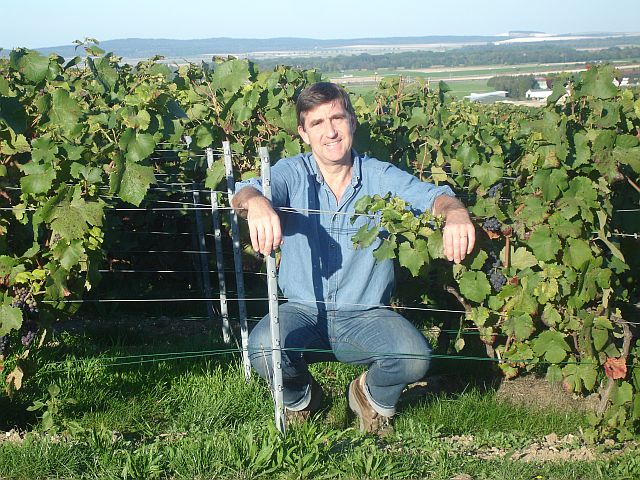
I had a meeting yesterday with Vincent Laval of champagne Georges Laval – a fascinating man who is the president of the biological champagne makers association. There is an acronym for the association but I won’t bother you with that for now (it wouldn’t be France without one; they do love their acronyms)
Vincent cultivates a very small estate of just 2.5 hectares of vines to make his champagnes, but contrary to what you might think he is quite satisfied with that. His philosophy is that small is usually better, and that approach is clearly illustrated in what he thinks about last year’s harvest.
Most people you talk to say that it was a superb vintage despite it being a small harvest. Vincent would turn that around to say that it was great quality because it was a small harvest.
There’ll be more on Vincent, on bio champagne and on bio-dynamic champagne (Yes there is a difference) in a new video coming soon and I’m really looking forward to filming it.
Biological (organic) cultivation started in Champagne back in the 1970s. I imagine you should say re-started because an hundred years ago I suppose that everything was biological. Anyway in the 1970s there were just 7 champagne houses who used biological methods and of those only 5 are still in operation:
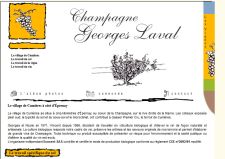 Georges Laval at Cumières
Serge Faust at Vandières (these days the company is called Ardinat Faust)
Jean Bliard at Hautvillers
Yves Ruffin at Avenay Val d’Or
and
Jacques Beaufort in Ambonnay
More have started more recently but there are still only 30 or so members of biological growers association in Champagne.
Anyway there will be lots more in the forthcoming video when I plan to interview several of these very passionate grower champagne makers and let them tell you all about what they do and why.
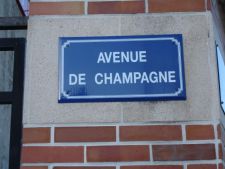 It's the most famous street in Champagne: The Avenue de Champagne in Epernay. For hundreds of years it's been the preserve of big houses such as Moët & Chandon, Pol Roger, Perrier-Jouët, De Venoge and a few others, but recently a few new names have started to appear. Names that you may not have heard of yet, but the chances are that you will hear of them soon.
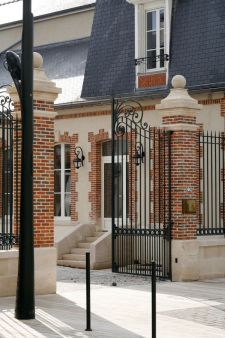 First was André Bergère who bought an elegant, but neglected house and did a magnificent job of restoring it to its former glory. The company has it's winery and most of its 40 or so hectares of vines just south of the Côte des Blancs in the village of Fèrebrianges. It won't surprise you to hear they make some excellent blanc de blancs champagnes.
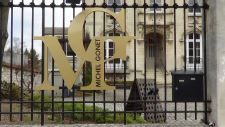 around France making them quite a diverse company.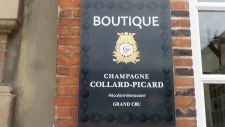
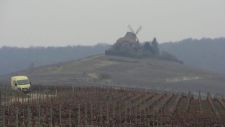 One of the things that I find most enjoyable about living in Champagne is the people you meet. Of course speaking to the champagne makers and tasting their grower champagnes is wonderful but in fact you can meet fascinating people at any moment.
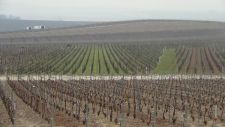 La Taille is one of the crucial steps in viticulture. It may look simple, but you have to know what you are doing and you have to be prepared to spend hours and hours in the vineyards because it's something that can only be done by hand.
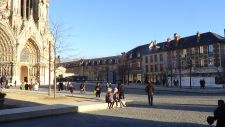 A few months ago I was out and about in Reims and I noticed a semi-derelict building on the piazza in front of the cathedral. You could just make out the remains of a sign that revealed that the building used to be the Garage de la Cathedral.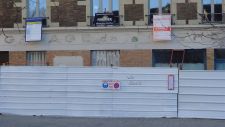
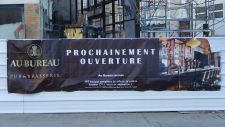 There’s still a bit of work to do mind you, but they should be finished in a few months and that’s a lot more than the guys working on the original cathedral could say.
 Champagne has become such a universally known drink that it’s understandable, in a way, that many people think that all champagne is pretty much the same. Moët & Chandon, or Taittinger, or Piper Heidsieck are much of a muchness they would say.
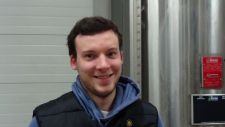 If you are one of my Facebook contacts you’ll remember that just before Christmas I said that I had been down to La Côte des Blancs to visit Charles Gimonnet at Champagne Gimonnet-Gonet and to taste some of their base wines. I promised that I would soon post the video of the visit and I’m happy to say that you can now view it below this post.